
 Huanghua Group Co., Ltd.
















Site Acceptance Testing: FAT vs SAT, Responsibilities and Handover Records
Site acceptance testing, or SAT, checks whether delivered and installed equipment meets the agreed project requirements at its operating location. For electrical equipment, the scope can include condition, installation interfaces, protective functions and documented test results. The approved test plan determines what is tested and what constitutes acceptance.
SAT is not simply a second copy of the factory test. Transport, assembly and site connections introduce conditions that were not all present at the factory.
FAT vs SAT: different boundaries
| Question | Factory acceptance testing | Site acceptance testing |
|---|---|---|
| Where? | At the manufacturer or agreed factory test location. | At the installation site. |
| What is available? | The manufactured assembly and agreed factory setup. | The delivered equipment and completed site interfaces. |
| Typical focus | Manufacturing conformity and agreed factory functions. | Installed condition and agreed site functions/interfaces. |
| Main record | Factory test report and outstanding items. | Site test report, deviations and handover status. |
The contract may allocate specific checks differently. The useful distinction is the test boundary, not a universal rule that every factory test must be repeated or that a factory pass eliminates the need for site checks.
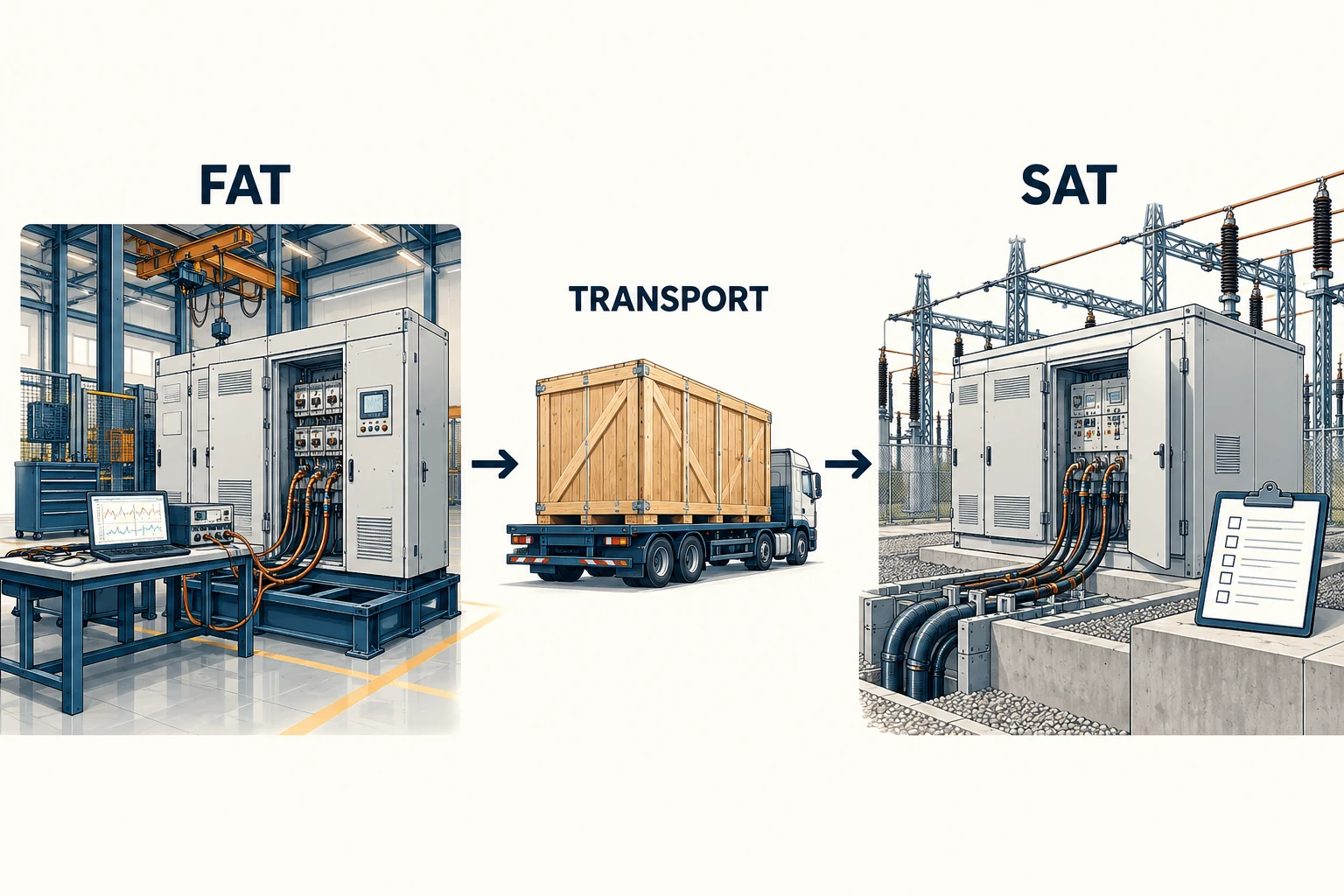
Agree the acceptance basis before testing
Each test should identify the applicable equipment, procedure, reference requirement and acceptance criterion. The project drawings and manufacturer instructions are essential inputs. A historical sample specification can help organize a plan, but its old standard editions or contractual conditions should not be copied into a new project without review.
For example, “check protection” is too broad to close out. A more useful record identifies the function, the approved configuration, the stimulus used by the authorized testing team, the expected response and the observed result. The plan should also say how failed or incomplete items are handled.
An electrical-equipment SAT checklist with defined boundaries
A useful checklist describes what will be demonstrated and where the evidence will be recorded. The following is a planning framework for a switchgear/transformer package; it is not a universal test procedure or a list of mandatory tests for every installation.
| Check group | Question to close | Record or acceptance basis |
|---|---|---|
| Equipment identity | Do supplied designations and nameplates match the approved equipment schedule? | Asset list, approved drawings and recorded deviations. |
| Transport and installed condition | Are damage, missing items and installation discrepancies resolved? | Receiving/installation inspection and disposition of findings. |
| Electrical test scope | Which specified tests apply to this equipment and installation stage? | Approved procedures, equipment instructions, measured results and project acceptance criteria. |
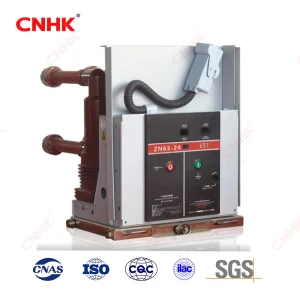
| Protection and control | Does each approved input produce the required trip, blocking and indication outputs? | Cause-and-effect schedule, current drawings and witnessed functional results where required. |
| External interfaces | Do local, remote, auxiliary-supply and communication boundaries work as specified? | Interface schedule and agreed end-to-end checks. |
| Handover | Are records, open items and acceptance authority explicit? | Signed disposition, punch-list status and controlled final documents. |
“Measure insulation resistance” is not a complete acceptance entry. The test authority must identify the equipment configuration, applicable procedure, permitted test conditions and acceptance basis. A generic threshold copied from another voltage class or component cannot close the requirement.
Example of one usable functional-test record
Consider a hypothetical panel whose approved cause-and-effect schedule requires an external trip input to open its designated breaker and produce a remote trip indication. The record might identify the panel and drawing revision, reference the authorized test procedure, list those two expected outcomes, and record the actual outcome for each. No universal terminal number, injection value or operating sequence is implied.
If the breaker opens but the remote indication does not arrive, the entry is incomplete or failed according to the project’s criteria; “breaker trips—pass” would hide the interface defect. The punch-list owner investigates the indication path, records the correction, and the affected function is retested under the approved plan. This example is illustrative, not a claim about a completed Huanghua project.
SAT completion and permission to energize are also different decisions. An accepted test report is one input to the project’s release process. Open safety-critical items, missing approvals or incomplete operating arrangements cannot be converted into authorization merely by signing a general SAT cover sheet.
Assign responsibility at each boundary
Separate the equipment supplier’s scope, the installer’s scope, the testing team’s work and the owner’s acceptance authority. A missing cable interface or unavailable control supply may prevent a functional test even when the delivered equipment itself is intact.
A handover record should answer more than “pass”
- Identity: equipment designation, serial number and drawing revision.
- Method: procedure reference and the applicable acceptance basis.
- Conditions: relevant configuration and environmental or operating conditions.
- Evidence: measured or observed results and instrument identification where applicable.
- Disposition: accepted, failed, incomplete or accepted subject to a clearly recorded condition.
- Responsibility: tester, witness where required, and acceptance authorization.
This is an editorial record structure, not a substitute for a project test specification. It helps prevent an unexplained checkmark from becoming the only evidence available during a later fault investigation.
Manage punch-list items explicitly
A punch list should identify the defect or unfinished work, its owner, the required action and the evidence needed for closure. Classify the item’s effect on the planned next stage. An incomplete label and a failed protection function should not disappear into the same undifferentiated list.
Repeat only the checks affected by a correction, together with any consequential checks required by the test authority. Record the change and the retest result against the original item. Do not erase the original failure from the history.
Applying the framework to a prefabricated substation
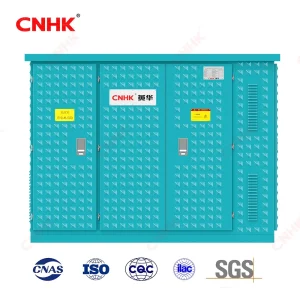
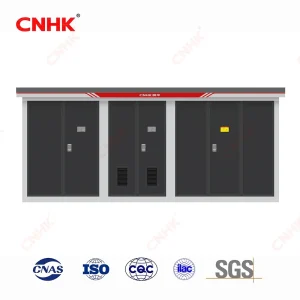
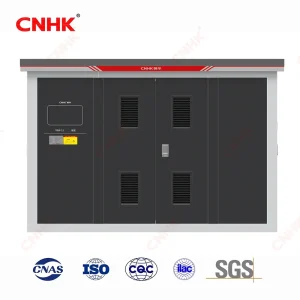
A Huanghua prefabricated substation combines equipment compartments in one product route. That can reduce the number of separate supply packages, but it does not remove site interfaces or the need for an agreed acceptance plan.
Request the factory records, installation/interface drawings and proposed site checks before delivery. Confirm which tests apply to each component and which apply to the integrated functions. The final handover should make clear what has been verified, what remains open and who authorizes the next operating stage.