
 Huanghua Group Co., Ltd.
Vacuum Circuit Breakers: Components, Operation and Selection Checks
A vacuum circuit breaker, or VCB, opens its main contacts inside sealed vacuum interrupters. In AC service, the interrupter controls the arc as the contacts separate and restores insulation across the gap after interruption. The vacuum bottle is one part of the breaker; the mechanism, controls and protection arrangement also determine how the complete assembly operates.
For a switchgear enquiry, “VCB” identifies the interruption technology. It does not establish the voltage rating, short-circuit duty, dimensions or compatibility with an existing panel.
How a vacuum circuit breaker interrupts current
Each interrupter contains a fixed contact and a moving contact inside a vacuum-tight envelope. A bellows permits movement while maintaining the sealed environment. When the contacts separate under current, an arc can exist in metal vapor released from the contact surfaces.
In AC interruption, the current passes through zero. The arc extinguishes, vapor production stops, and the gap rapidly recovers its insulating capability. The breaker must withstand the recovery voltage that appears across the open contacts. Vacuum therefore does not mean that no arc forms; it describes the environment in which interruption takes place.
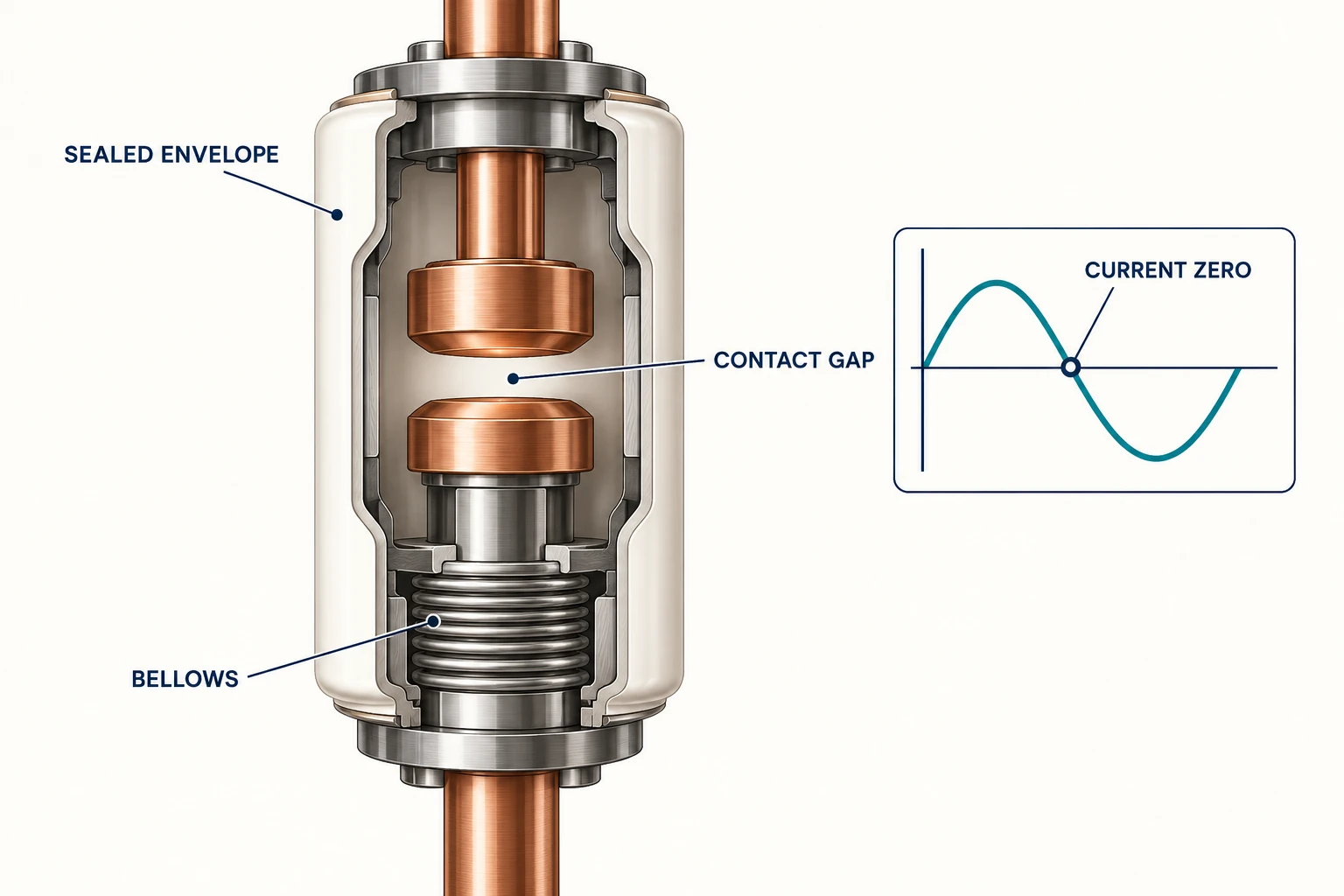
Follow one opening operation through the breaker
- Closed state: the fixed and moving contacts touch, providing the conducting path through the interrupter. Contact force is part of the mechanical design.
- Opening starts: a valid trip command releases the operating mechanism. The moving contact separates through the interrupter’s sealed moving assembly.
- Arc interval: contact separation under current produces a metal-vapor arc. The contact design and interrupter construction manage the arc during this interval.
- Interruption and recovery: in the intended AC duty, interruption occurs around a current zero, followed by rapid recovery of insulation across the gap. The open gap must withstand the associated recovery voltage.
The relay’s decision and the physical interruption are separate events. A correct protection command cannot compensate for an unavailable trip supply or a defective mechanism. Equally, a mechanism that opens during a functional check does not demonstrate the interrupter’s complete short-circuit capability.
Where vacuum interruption helps—and what it does not solve
Vacuum interrupters are widely used in medium-voltage distribution switching. They are also used in equipment designed for repetitive switching duties. Keeping the arc inside a sealed bottle separates the interruption process from an open-air contact gap. The interrupter itself does not use an oil or SF6 arc-quenching medium.
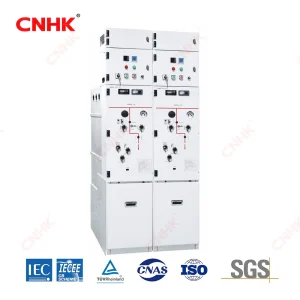
That last point describes the interrupter, not every part of the switchgear around it. A panel containing vacuum breakers can use a separate insulation system, and the complete assembly still needs an appropriate environmental and maintenance assessment. The phrase “vacuum breaker” is not proof that the entire installation is gas-free or maintenance-free.
Switching duty matters as well as normal current. Motor switching, transformer switching and capacitor switching can create different transient conditions. The design review may need the manufacturer’s application guidance, switching-duty data and a system study. Adding an arbitrary surge device is not a universal answer.
A vacuum contactor and a vacuum circuit breaker can use the same broad interruption technology while serving different switching and protection duties. Frequent motor starts may lead to a contactor-based design with coordinated protection; feeder fault interruption may lead to a breaker-based design. The selected equipment ratings and coordination establish the choice.
The interrupter, mechanism and relay have different jobs
The interrupter handles the electrical interruption. The operating mechanism supplies the motion needed to open and close the contacts. Protection equipment identifies the conditions that call for tripping, while the trip circuit conveys the command. A problem in one part cannot be diagnosed merely by observing that the breaker failed to open.
This distinction helps organize a specification. Request the breaker ratings and mechanical arrangement separately from the protection functions and control supply. Also identify which party supplies the relay, current sensing, trip-circuit supervision and panel interfaces.
Read the duty ratings together
| Information to request | Question it answers |
|---|---|
| Rated voltage and insulation data | Is the breaker designed for the system and its insulation requirements? |
| Rated normal current | Does the selected assembly cover the continuous duty under its stated conditions? |
| Short-circuit breaking and making duties | Does the proposal cover interruption and closing onto the specified fault conditions? |
| Short-time withstand and operating sequence | Does the equipment match the protection and switching requirements? |
| Control and mechanism information | Are the trip, closing and stored-energy functions compatible with the station? |
Do not combine the highest values from different catalog variants into an imaginary specification. A complete order code should tie the electrical ratings to the proposed physical version and its supporting documents.
Panel compatibility needs more than a matching voltage
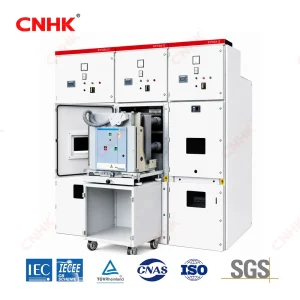
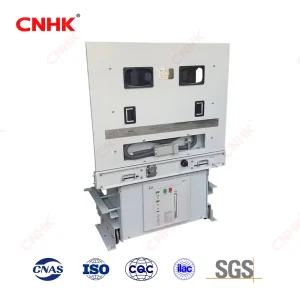
For a withdrawable breaker, the panel interface includes the truck arrangement, primary contact positions, secondary connections and interlocks. Confirm these against the actual panel drawings. A breaker that appears to fit the compartment is not necessarily interchangeable.
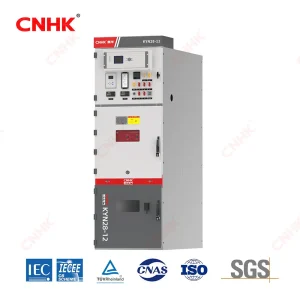
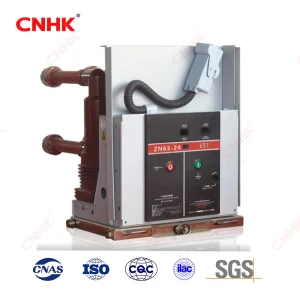
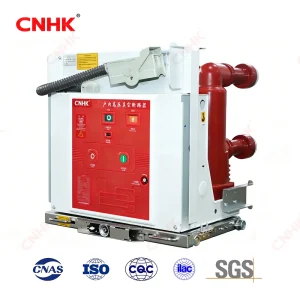
Huanghua lists a ZN63A(VS1)-12 indoor vacuum circuit breaker. Its KYN28 air-insulated switchgear provides a relevant panel route. The product relationship is a starting point for confirmation, not a statement that every available breaker or panel variant matches.
What to include in a replacement or new-build request
For replacement work, provide the existing nameplate, panel designation, drawings, service duty and reason for replacement. For a new installation, provide the approved single-line diagram, fault-duty information, control philosophy and installation conditions. Identify any required mechanical or electrical endurance documentation in the enquiry.
Vacuum interruption does not remove the need to maintain the mechanism, insulation surfaces, auxiliary circuits and interlocks according to the selected equipment manual. Likewise, a successful operating test is not evidence that every electrical duty has been verified. Keep the inspection and test records associated with the exact assembly.