
 Huanghua Group Co., Ltd.
Tier 1 vs Tier 2 Suppliers: Engineering Authority and Change Approval
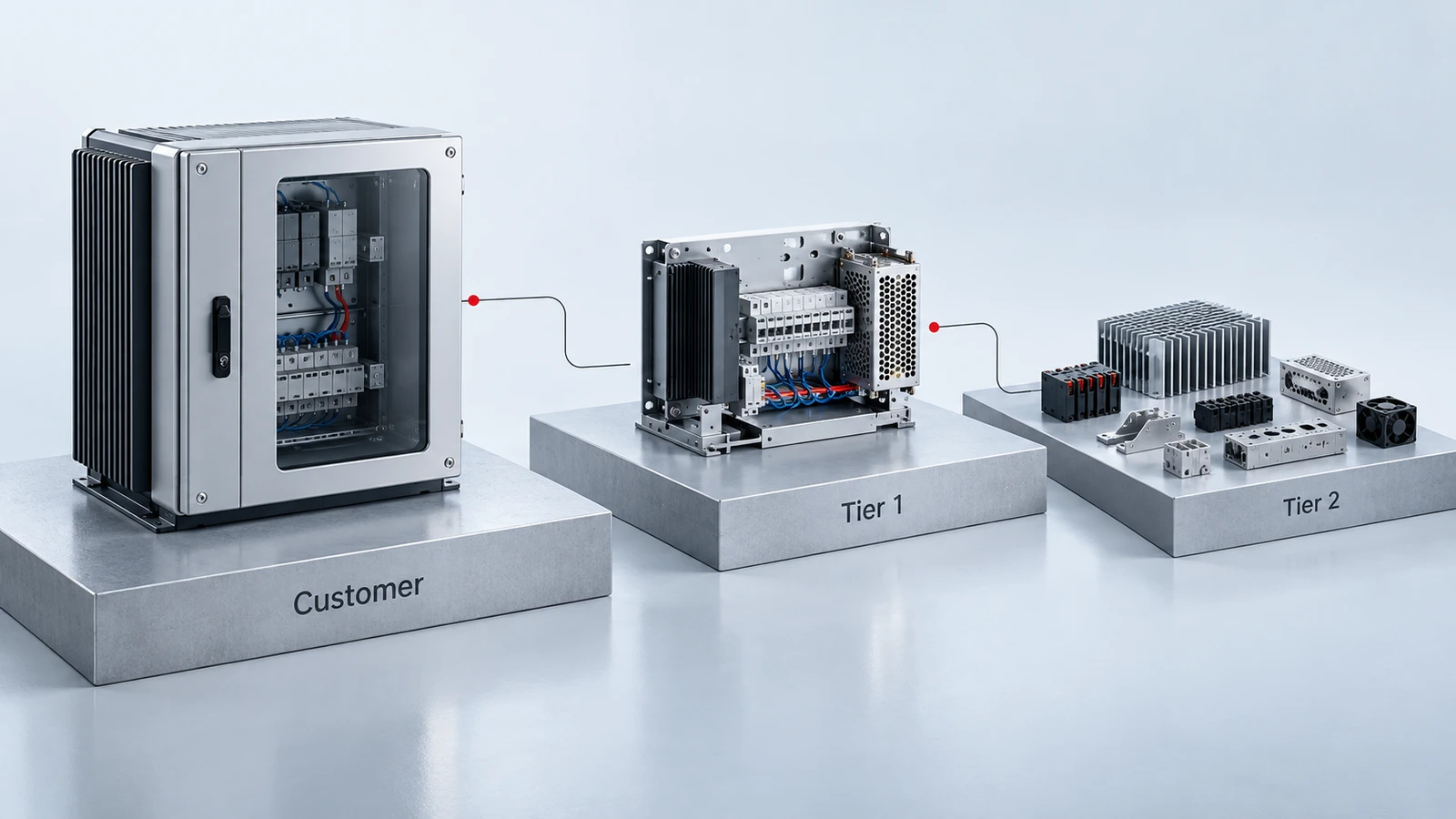
Tier 1 and Tier 2 describe a supplier’s position in a particular supply relationship; they do not automatically assign engineering authority. A Tier 1 supplier usually supplies the defined customer or OEM directly, while a Tier 2 supplier supplies that Tier 1 organization. Design control and change approval must be established separately.
The same company can occupy different tiers on different programs. It can also manufacture a customer-controlled design on one order and own a defined subsystem design on another. A supplier-tier label is therefore a poor substitute for a responsibility matrix.
Define the reference point
Before drawing a tier map, identify the customer, product and program being discussed. A direct component supplier to one equipment manufacturer can be a sub-tier supplier in another chain. NIST’s supply-chain integration report explicitly discusses how a company’s tier can change with its customer relationship.
Write the map for the actual order rather than describing a business as permanently Tier 1 or Tier 2. Include the manufacturing location where relevant: a corporate name alone can hide a different factory, subcontractor or process route.
Separate four kinds of authority
| Role | Decision controlled | Evidence to identify |
|---|---|---|
| Commercial customer | Purchase scope, delivery and contractual acceptance | Order and agreement |
| Design authority | Product requirements and controlled design changes | Approved responsibility assignment and design records |
| Manufacturing authority | Permitted production methods within the approved requirements | Process scope and controlled work instructions |
| Quality or acceptance owner | Required inspection, test and release disposition | Acceptance plan and authorized approval route |
One organization may hold several roles, but the combination should be explicit. A purchase order from a Tier 1 supplier does not necessarily authorize every Tier 1 employee to change an OEM-controlled interface. Likewise, a capable Tier 2 engineering team does not automatically have permission to modify the customer’s drawing.
Build-to-print and design-responsible work
In build-to-print work, the supplier manufactures to controlled requirements provided or approved by another party. It can identify problems and propose improvements, but approval is still needed when the proposal changes a controlled requirement.
In a design-responsible scope, the supplier may control a defined component or subsystem design. That responsibility can still be bounded by customer interfaces, performance requirements and required approvals. It is not unlimited authority over the complete product.
Jabil’s published production-part approval procedure provides a real example of a customer-defined approval process. It distinguishes design records and engineering approvals within its own program. That example demonstrates why the actual customer process must be read; it is not a universal rule governing every manufacturer.
Trace a change through the chain
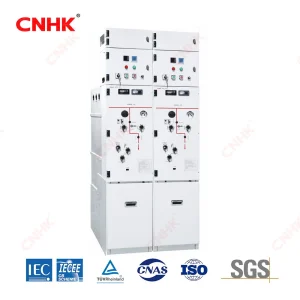
Consider an illustrative electrical-cabinet program. An OEM buys the complete cabinet from a Tier 1 integrator. A Tier 2 fabricator makes the internal mounting plate. The fabricator proposes moving a hole to simplify tooling.
The commercial request may pass through the Tier 1 integrator, but the technical approval depends on who controls the mounting interface. If the OEM controls that interface, the Tier 1 cannot assume its own production convenience settles the change. If the plate design is expressly delegated to the integrator, the route can differ.
The change package should show the affected drawing, reason, interface impact, proposed verification and effective revision. The approved configuration must then reach purchasing, production, inspection and any affected sub-tier suppliers. An email saying “looks fine” without a clear scope can leave the wrong units built to the wrong revision.
Control process and source changes too
Not every significant change alters a drawing dimension. A new material source, manufacturing site, coating process, tool or subcontracted operation can affect the product or its evidence. The customer’s change-notification requirements should state which changes need notice and approval.
Do not assume that an unchanged part number means an unchanged manufacturing baseline. Conversely, do not demand the same approval process for every minor administrative change. Define the categories and decision rights in proportion to the product and project requirements.
Maintain sub-tier visibility where it matters
A direct supplier can rely on several critical sub-tier processes. Mapping those dependencies helps identify where shortages, quality issues or uncontrolled changes could affect delivery. NIST’s manufacturing guidance emphasizes the value of mapping supply chains beyond the immediate supplier.
Focus on consequential dependencies rather than collecting names without a purpose. A proprietary component, sole-source material or outsourced special process may deserve more attention than a readily available low-risk consumable. Agree the information needed and how it will be kept current.
Questions for a sourcing review
- Relative to which customer and program is the supplier Tier 1 or Tier 2?
- Who controls the product requirements, drawings and critical interfaces?
- Which design tasks, if any, are delegated?
- Who approves alternatives, deviations and permanent changes?
- Which manufacturing or source changes require notification?
- How are revisions and approvals communicated to sub-tier suppliers?
- What evidence is required before changed parts can be released?
For electrical project delivery, connect that matrix to the acceptance-testing scope. The party supplying an assembly and the party accepting the installed system may need different evidence and approval points.
Common questions
Is Tier 1 always more technically capable than Tier 2?
No. Tier position describes the relationship, not a universal ranking of engineering capability. A specialist sub-tier supplier can have deep expertise in a narrow process.
Can a Tier 2 supplier propose a design change?
Yes, through the agreed route. Proposing a change and authorizing its incorporation are different actions.
Does tier position determine intellectual-property ownership?
No. Ownership and permitted use depend on the actual agreements and design scope. Record them explicitly rather than inferring them from a supply-chain diagram.