
 Huanghua Group Co., Ltd.
Contract Manufacturer vs OEM: Design Inputs, Responsibilities and RFQ Checklist
A contract manufacturer provides manufacturing services under an agreed scope; OEM means original equipment manufacturer, but its commercial use varies by industry. The most useful comparison is therefore not the label alone. Establish who controls the design, who builds the product, who approves changes and who accepts the finished equipment.
A supplier can manufacture under contract for an OEM, while also offering its own standard products. The two descriptions are not always mutually exclusive. A quotation should define the work and responsibilities clearly enough that a different reader can reach the same interpretation.
Why the terminology causes confusion
Some sourcing discussions use OEM to describe adapting a supplier’s existing platform, while contract manufacturing describes building to the customer’s drawings. Komaspec uses that distinction in its manufacturing guide. In other industries, OEM commonly refers to the company responsible for the original equipment or the branded product.
Neither usage settles intellectual-property ownership, warranty scope or engineering authority by itself. Those depend on the actual agreement and project structure. Avoid writing “OEM always owns the design” or “a contract manufacturer never does engineering” as universal rules.
Instead, name the roles in plain language. The brand owner, design authority, component manufacturer, final assembler and acceptance owner may be different organizations. Each may also perform more than one role.
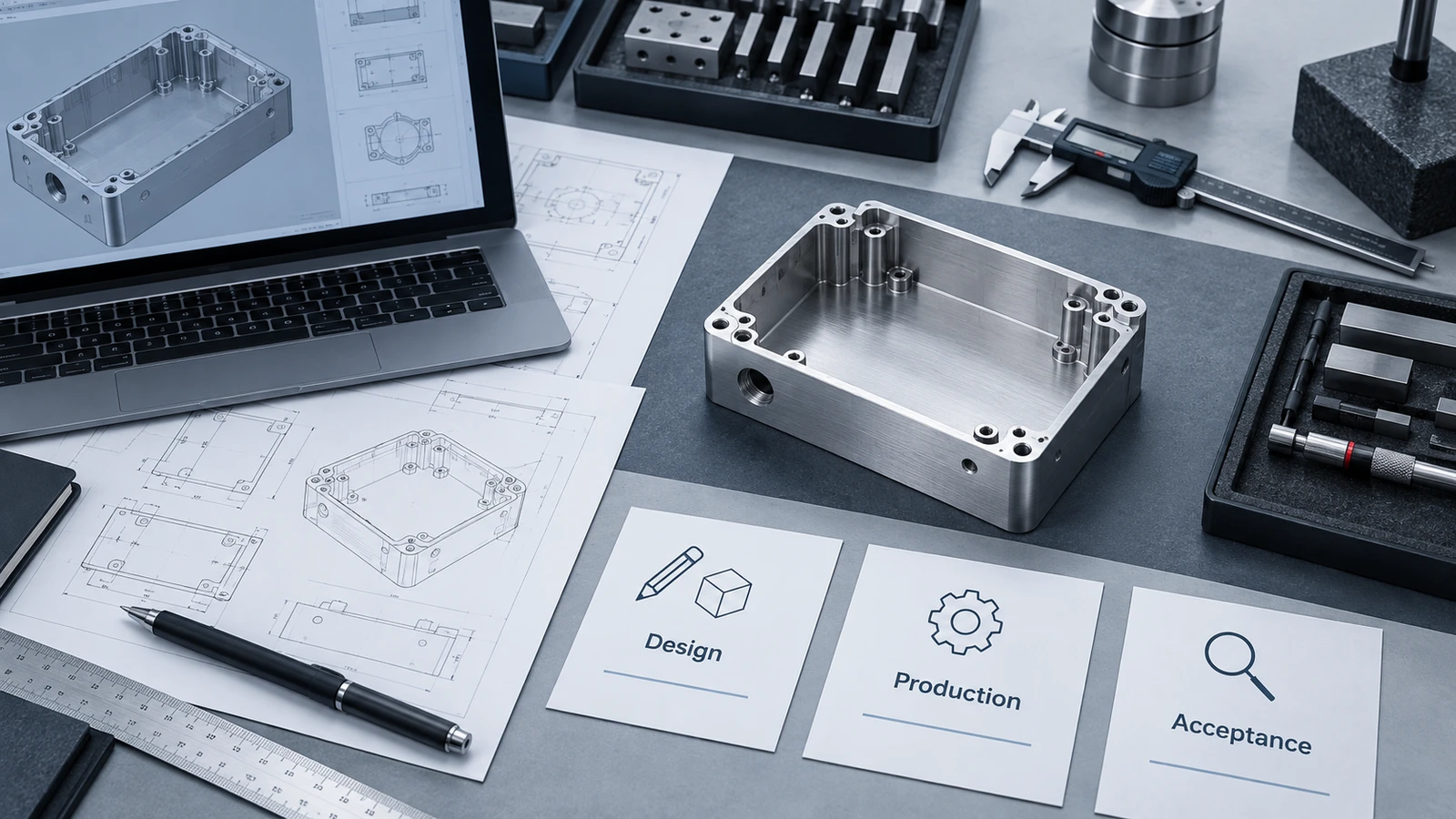
Compare three sourcing arrangements
| Arrangement | Typical starting point | Key question |
|---|---|---|
| Build to print | Customer-controlled drawings and specifications | Who approves manufacturability changes and deviations? |
| Adapt a supplier platform | Existing supplier design with agreed modifications | Which parts are standard, customized and controlled by each party? |
| Joint development | Requirements with design work divided between parties | Who owns each deliverable and authorizes the final release? |
These are practical descriptions, not formal definitions for every industry. They help expose the work hidden by a short label. Two suppliers quoting “OEM service” may be offering very different amounts of design, sourcing, testing and documentation.
Build a responsibility matrix
Assign an accountable owner for requirements, drawings, bill of materials, approved alternatives, tooling, manufacturing instructions, test specifications and product release. Record which party prepares each item, which reviews it and which has final approval.
Include change control. A manufacturer may recommend a different fastener, coating or terminal because of availability or production experience. The recommendation should not become an undocumented design change. Define the evidence and approval route before the first shortage occurs.
Also distinguish production engineering from product-design authority. A supplier can develop an efficient fixture or work sequence without gaining permission to alter the customer’s safety-critical dimensions. Conversely, a project may deliberately delegate a defined design scope. The boundary should be written.
What a quotation needs beyond unit price
Separate recurring production cost from nonrecurring work such as engineering, tooling, fixtures, test development and first-article activity. Identify which materials are included, who purchases long-lead components and who bears the risk of obsolete or excess stock.
Define the assumptions behind quantity and delivery. An annual forecast, one purchase release and a firm minimum order are different commitments. A low unit price based on stable high volume may not apply to a small pilot batch with repeated design revisions.
For quality, specify the required evidence rather than asking only whether a supplier has a quality department. Drawings, inspection plans, traceability, test reports and deviation handling should match the product’s risks and the customer’s requirements.
An enclosure-program example
Consider an illustrative industrial enclosure program. The customer supplies a released drawing set and wiring requirements, while the manufacturer fabricates the enclosure and assembles purchased equipment. During the first build, the manufacturer proposes moving a mounting hole to improve tool access.
The proposal may be sensible, but it can affect fit with customer equipment or an approved interface. The agreed design authority reviews the change, updates the controlled drawing if accepted and defines which units use the new revision. Production resumes against the approved configuration.
Compare that with a platform-based order where the supplier controls a standard enclosure design and the customer selects agreed options. The documentation and approval boundary can be different. Calling both arrangements OEM would not explain that difference to the production team.
RFQ checklist for manufacturing partners
- Product purpose, target markets and project requirements.
- Controlled drawings, BOM, revision status and unresolved design items.
- Manufacturing and assembly scope, including outsourced operations.
- Design authority and approval rules for alternatives or deviations.
- Prototype, pilot and production quantities with delivery assumptions.
- Inspection, testing, traceability and required handover records.
- Tooling, data access, maintenance and transfer arrangements.
- Commercial treatment of changes, rework, spares and obsolescence.
This checklist supports a clearer enquiry; it does not assign legal ownership or contractual liability. Those terms need to be agreed explicitly. In particular, paying for tooling or engineering does not by itself explain every right to designs, software or manufacturing know-how.
Apply the comparison to electrical equipment
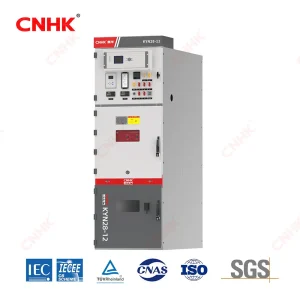
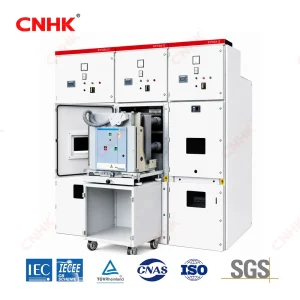
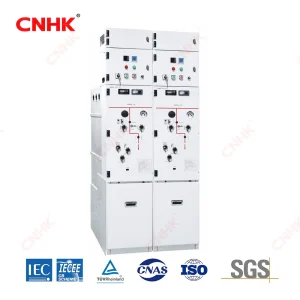
For power-distribution equipment, start with the exact product category and project specification. Confirm whether the enquiry concerns a standard product, a defined modification or a broader manufacturing program. Ask for evidence relevant to that scope rather than assuming every electrical manufacturer offers every type of contract assembly.
Huanghua’s company information provides a starting point for discussing its power-equipment scope. A specific OEM or contract-manufacturing proposal still needs confirmation of the process, product requirements and deliverables.
Common questions
Is a contract manufacturer the same as an OEM supplier?
The roles can overlap. Define the design, production and acceptance responsibilities for the order instead of relying on the label.
Who owns the tooling?
That must be established in the agreement, including access, maintenance, replacement and transfer conditions. The manufacturing label does not settle it.
Which model is cheaper?
Compare total scope and lifecycle assumptions. Design work, tooling, volume, component sourcing, testing and change frequency can matter more than the category name.