
 Huanghua Group Co., Ltd.
RCD Testing and Safety Switch Test Records: An Australian Guide
RCD testing checks specified aspects of a residual current device’s operation. In Australia, the phrase can mean a user-operated safety-switch test button or professional instrumented verification. Those activities are not equivalent, and the required test program depends on the premises, work environment and jurisdiction.
A useful test record makes clear what was tested, by whom, under which procedure and with what result. A sticker saying only “RCD tested” may leave all four questions unanswered.
Test button versus instrumented testing
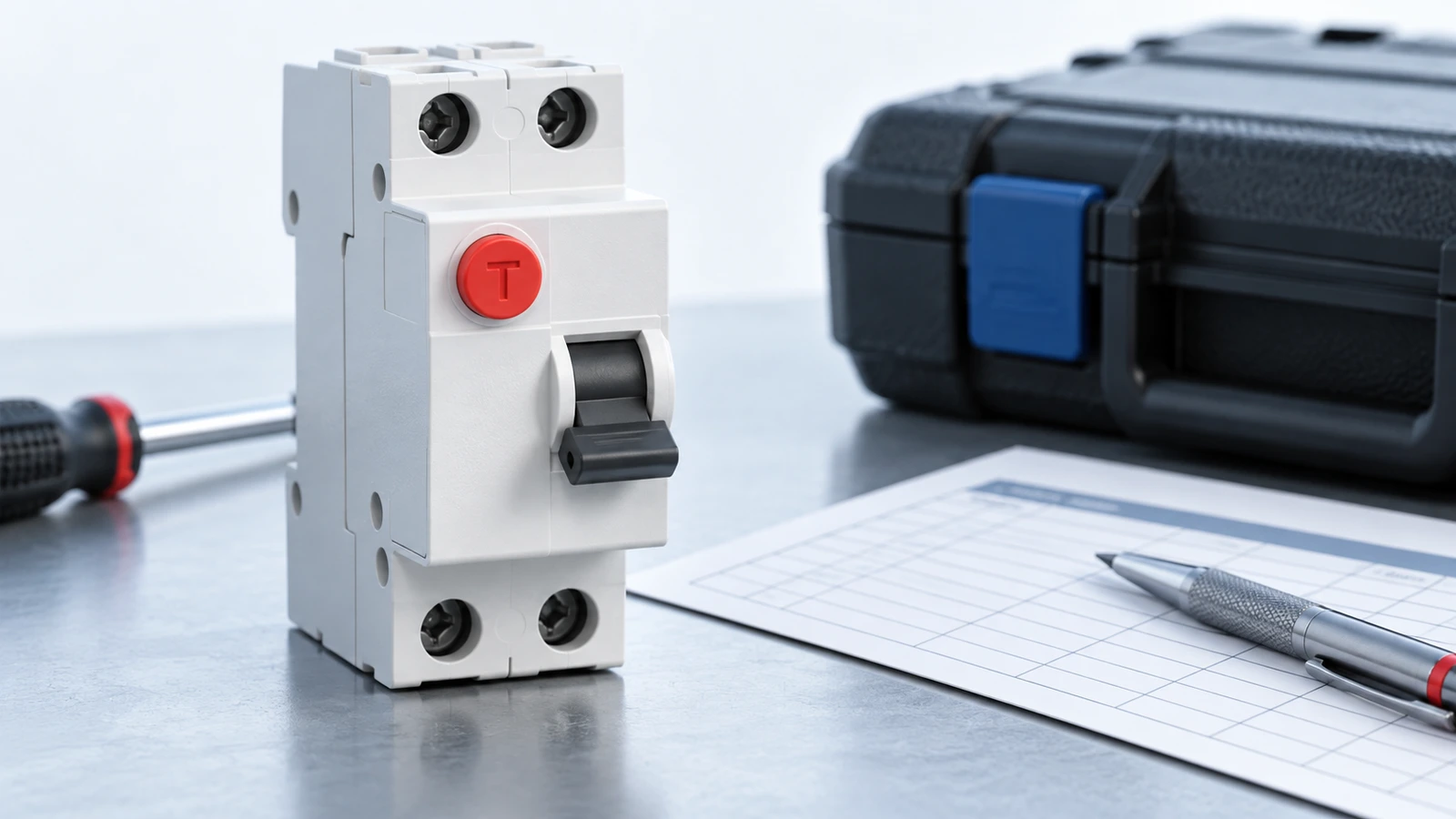
The test button provides a built-in functional check under the device manufacturer’s intended conditions. It is valuable, but a successful button operation does not measure every installation parameter or prove the complete protective arrangement.
Instrumented testing can assess specified operating characteristics using suitable equipment and a defined method. It must be performed by a person with the competence and authorization required for the work. The procedure and acceptance criteria must fit the device and the applicable installation or workplace requirements.
| Activity | What the record should identify | What not to infer |
|---|---|---|
| User test-button check | Device or protected circuit, date and observed operation | That trip time, wiring and every circuit parameter were verified |
| Professional RCD verification | Device data, method, instrument, criteria and measured results as required | That every unrelated part of the installation was assessed |
| Installation inspection and testing | Defined installation scope, observations and required test results | That an excluded area or circuit was included |
Do not use one national interval for every site
Australian guidance differs by jurisdiction and premises type. Queensland’s Electrical Safety Office recommends a three-monthly safety-switch test-button check for householders in its home-safety guidance. That is a specific source and context, not a universal interval for all Australian workplaces.
Workplaces, construction activities, rental properties and specialized facilities may have different duties and verification programs. Western Australia’s home-safety guidance likewise addresses its own jurisdiction and explains when a licensed electrical contractor should be contacted.
For a facility program, identify the relevant state or territory requirements, the applicable standards, the environment and the equipment instructions. Write the source of the selected interval in the maintenance plan. Copying the shortest interval found online is not a substitute for identifying the correct obligation.
Plan the interruption before a button check
A safety switch is intended to interrupt supply when its test function operates. Occupants and responsible personnel need to know which circuits may be affected. Consider equipment that requires a controlled shutdown, alarms, refrigeration, communications and any other critical loads.
Follow the manufacturer’s and local authority’s guidance. A user check should not involve opening the switchboard, removing covers or touching internal conductors. If the device is damaged, the instructions are unclear or safe access is doubtful, arrange appropriate electrical assistance.
If the test button does not produce the expected operation, or the device cannot be reset as instructed, seek a licensed electrical contractor. Do not bypass the device or keep forcing the operating handle. Queensland and Western Australian home-safety guidance both treat a failed safety-switch check as a reason for professional attention.
Build a register that identifies the actual device
A building can have several boards and similar-looking devices. Give each relevant RCD an identifier tied to its location and protected circuits. Record the model, marked ratings and residual-current type where needed for the verification program.
Keep the circuit schedule current after modifications. Otherwise, a maintenance record can remain apparently complete while the named device no longer protects the same equipment. The asset register, distribution-board schedule and test report should refer to the same physical arrangement.
A practical test-record structure
| Field | Example of the information needed |
|---|---|
| Asset identity | Board, device reference, location and protected-circuit description |
| Test scope | Button check, instrumented RCD verification or wider installation work |
| Procedure basis | Applicable local requirements and equipment instructions |
| Person and date | Responsible person, competence details where required, actual test date |
| Results | Observed operation or measured results against stated criteria |
| Action | Defect, restriction, responsible owner, repair reference and retest status |
This is a proposed record structure, not a statutory form. Add the fields required by the site’s actual program. Avoid recording “pass” when only an incomplete activity was performed or when an unresolved defect remains.
Handle failed tests as maintenance work
A defect should have an owner and a closure record. Depending on the finding and local requirements, equipment may need to be withdrawn from use or otherwise controlled pending repair. Replacing a sticker without resolving the defect is not a retest.
After repair or replacement, identify what changed and what verification was completed. If circuit protection was redesigned, update the drawings and schedules as well as the maintenance register. A replacement device with a different residual-current type or rating should not be treated as an invisible administrative change.
For broader commissioning records, see site acceptance testing. Maintenance checks and acceptance tests can share asset identifiers while retaining their different scopes.
Common questions
Does a successful test-button check prove the wiring is correct?
No. It demonstrates the observed built-in test response. Wiring and installation verification require the appropriate additional checks.
Can any employee perform instrumented RCD tests?
Competence and authorization depend on the task and applicable requirements. Do not assume that permission to press a user test button authorizes electrical testing work.
What if a safety switch trips during normal use?
Record the circumstances and arrange qualified investigation. Do not assume the device is faulty or bypass it to restore service.