
 Huanghua Group Co., Ltd.
What Is an MCCB? Full Form, Trip Units and Selection Checks
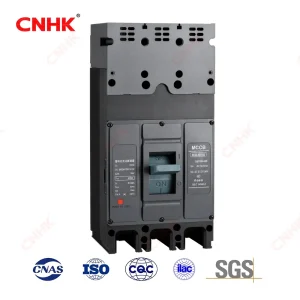
MCCB stands for molded case circuit breaker, also written “moulded case circuit breaker.” It identifies a family of circuit breakers used in electrical distribution. The selected trip unit determines the protective functions and operating characteristics available in a particular configuration.
The name alone does not mean that every MCCB has adjustable settings, electronic protection or the same current range. A useful selection starts with the exact breaker and trip-unit designation, then checks the ratings and connection requirements under the intended operating conditions.
What an MCCB assembly does
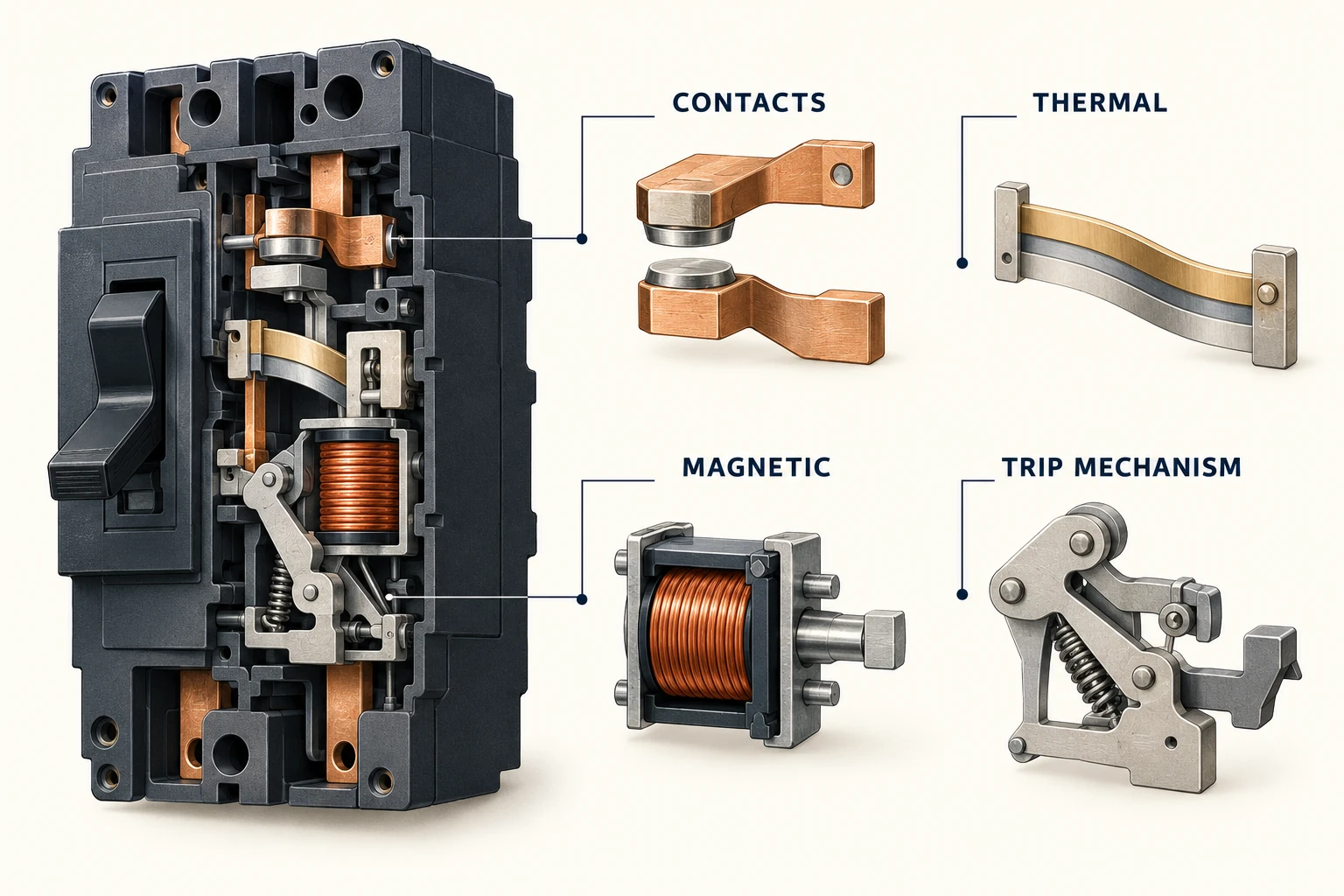
An MCCB combines the breaker assembly with its specified protection and operating features. Its contacts perform switching and interruption, while the trip arrangement determines the response to the conditions it is designed to detect. The operating handle and any additional accessories provide the selected means of control or indication.
For a buyer, the important distinction is between the physical version and the protection configuration. A frame description does not fully identify the trip functions. Likewise, an accessory description does not establish the breaker’s short-circuit capability. These fields need to remain separate when comparing offers or asking a panel builder to confirm a selection.
MCCB trip units: functions and adjustment vary
Thermal-magnetic and electronic trip units are both used in molded case breakers. Their available functions and adjustment arrangements depend on the product. Some MCCBs have fixed thresholds: an OEM’s fixed thermal-magnetic documentation is a useful counterexample to the claim that every MCCB is adjustable.
| Trip arrangement | Selection question | Evidence to request |
|---|---|---|
| Thermal-magnetic | Which overload and short-circuit functions does this version provide? | The exact trip-unit designation, fixed or adjustable characteristics, and applicable curves. |
| Magnetic-only / instantaneous electromagnetic | Where is the required overload protection provided? | The complete protection arrangement; do not assume this option provides every function of a combined release. |
| Electronic | Which functions and adjustments are included in the selected controller? | The controller manual, function list and applicable setting ranges for that version. |
“Electronic” is not a complete functional specification. The offer should identify what the controller actually provides. Communication, earth-fault protection or another additional feature should not be assumed from the presence of an electronic trip unit.
The same discipline applies to adjustable versions. The existence of an adjustment does not establish the correct value for a project. Selection and coordination require the relevant characteristics and system information.
Read current and short-circuit ratings separately
A frame designation, a rated current and a protection setting answer different questions. Record the exact terms used in the manufacturer’s documents rather than treating every ampere value as the same limit. Ask the supplier to identify the selected breaker and trip unit together when a model code is unclear.
Short-circuit ratings also need their stated conditions. Icu refers to ultimate short-circuit breaking capacity; Ics refers to service short-circuit breaking capacity. They describe different rated duties. Neither abbreviation, by itself, is a field instruction to reset or return a breaker to service after a fault.
Compare the values at the intended voltage and for the selected configuration. A value quoted at one voltage should not be silently applied at another. Keep the manufacturer’s original rating labels and conditions in the comparison sheet so that a larger headline number does not hide a different basis.
These checks establish what the proposed device is rated to do. They do not replace the project’s fault-duty assessment or determine protective settings.
Turn the requirements into a defined selection
A concise enquiry should identify the system voltage and frequency, required load duty, available fault information, pole arrangement and connection requirements. Where the project is still being designed, distinguish confirmed inputs from items that remain for the designer to specify.
The protection requirement should state the functions needed, not just request an “adjustable MCCB.” Ask for the trip-unit manual and characteristics corresponding to the offered order code. Any additional operating, indication or release accessories should also be identified explicitly.
For comparison, keep a separate record for the physical version, protection functions, electrical ratings and connections. The supplier can then confirm each requirement against a defined configuration. This is more useful than comparing two family names or two current values without the documents that explain them.
Choosing between the HKM1 and HKM1E pathways
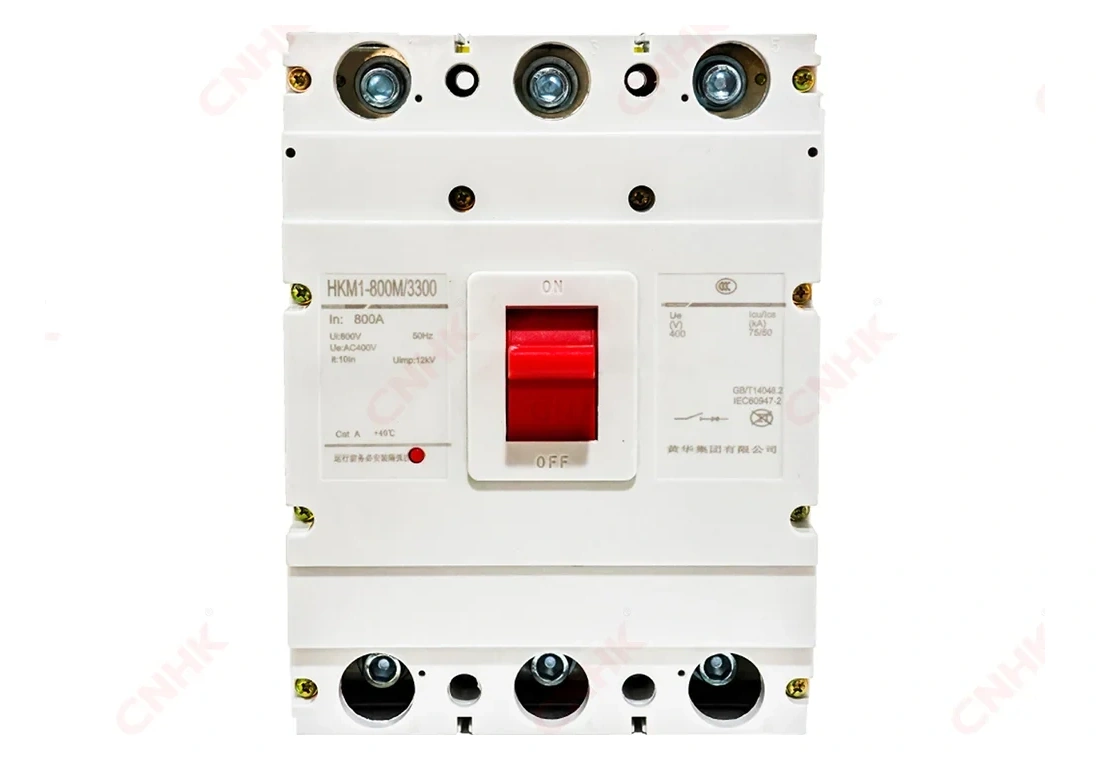
The HKM1 Series MCCB lists combined thermal-electromagnetic and instantaneous electromagnetic release alternatives. It also lists front, rear and plug-in connection options. An enquiry should identify the required release and connection version rather than assume the family name selects them automatically.
The HKM1E Electronic Trip MCCB provides a separate route where the requirement calls for its published adjustable electronic overload, short-delay and instantaneous functions. Request the exact model’s documents to confirm that the proposed configuration meets the project requirements; do not transfer functions or ratings between the two series.
References
Schneider Electric: fixed thermal-magnetic protection example
Schneider Electric: meanings of Icu and Ics
ABB: molded-case breaker and trip-unit variants