
 Huanghua Group Co., Ltd.
Air Circuit Breakers (ACB): Working Principle, Components and Selection Checks
An air circuit breaker (ACB) is a switching and protection device that opens a circuit through separating contacts and controlling the resulting arc in air. In low-voltage distribution, its protection unit, operating mechanism and contact assembly perform different jobs. Choosing an ACB therefore requires more than matching a current value: the selected protection functions, mounting arrangement and control accessories must also suit the project.
How an air circuit breaker works
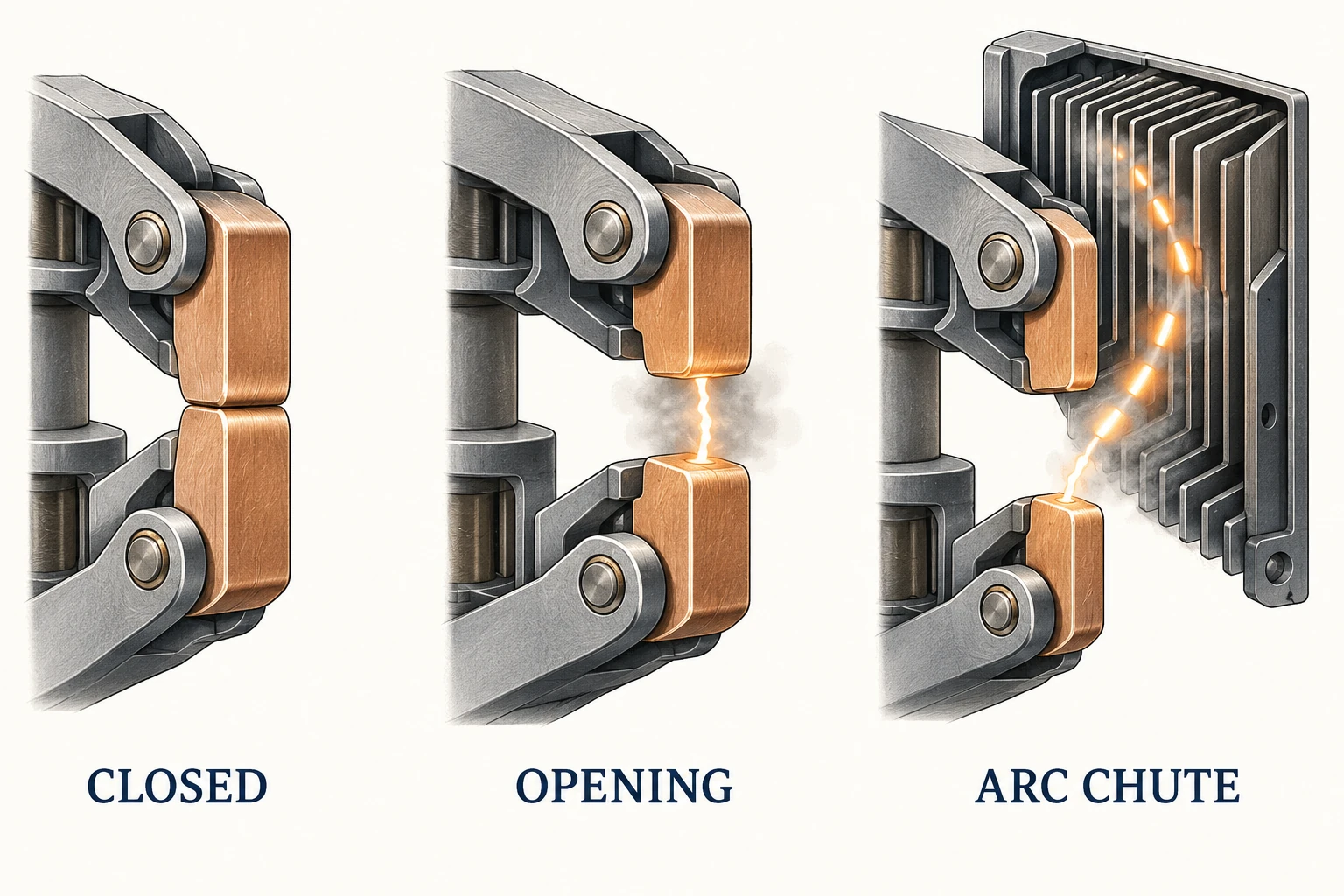
The operating sequence starts with current sensing. A protection unit evaluates the measured current against the functions enabled in that configuration. When the applicable trip conditions are met, it initiates the opening action. The mechanism releases the contacts, while the arc-control assembly manages the arc produced during interruption.
These stages answer different questions. The protection unit determines when a protective trip should occur. The mechanism performs the mechanical opening. The contacts and arc chamber handle interruption. A description of one stage cannot establish the capability of the whole assembly.
This distinction also matters when comparing optional controls. A separate opening command is not the same as the protection unit detecting an overcurrent condition. The required control accessories and their supply details belong in the order specification alongside the protection requirements.
Read a rating schedule as several independent limits
Consider a hypothetical switchboard schedule with a 400 V operating voltage, a 1,600 A breaker frame, a selected 1,250 A current rating and a calculated 35 kA prospective short-circuit current at the installation point. These are teaching values, not HKW1 ratings. The 1,600 A frame does not establish the protective setting, and neither current value establishes whether the breaker can interrupt the prospective fault.
The reviewer needs the selected breaker’s breaking ratings at 400 V and the protection characteristics for that trip unit. If the manufacturer’s relevant breaking rating is below the assessed fault duty, a larger frame label does not cure the mismatch. Conversely, a sufficient breaking rating does not establish cable protection, selectivity or acceptable temperature rise in the assembled switchboard.
Protection abbreviations also describe different tasks. L commonly denotes long-time overcurrent protection, S short-time, I instantaneous and G ground-fault protection where provided. A controller designation such as LSIG is a function description, not a set of approved settings. The selected controller manual establishes the actual functions, ranges and dependencies. This is why the rating schedule and the protection study must refer to the same configuration.
Which components determine the required configuration?
Component names are most useful when connected to a selection question. The following division helps keep the protection requirement separate from the hardware and auxiliary controls.
| Part or function | Its role | What to confirm |
|---|---|---|
| Current sensing and protection unit | Evaluate the current and enabled protection functions. | Exact controller designation, available functions and applicable documentation. |
| Operating mechanism | Produce the contact-opening action. | The operating arrangement specified for the selected version. |
| Contacts and arc chamber | Carry and interrupt the circuit. | The complete breaker’s rated data under the stated electrical conditions. |
| Auxiliary releases and contacts | Provide the selected control or indication functions. | Required accessories, control supply and order codes. |
An accessory list does not establish that every listed item is included. A buyer should request a configuration-specific offer showing the controller, mounting version and selected accessories together. This also gives the panel builder a defined set of documents to review.
Fixed or withdrawable: decide from the installation
Fixed and withdrawable arrangements are separate product choices. The decision should follow the switchboard design, connection arrangement and required access, rather than a general claim that one version is always better.
For either arrangement, request the applicable outline and connection drawings. A withdrawable selection also needs the documentation for its matching assembly and access requirements. The selected version should be identified on the offer so that dimensions and accessories from another configuration do not enter the comparison.
The word “withdrawable” is not an instruction to move or remove a breaker under operating conditions. Any inspection, isolation or movement procedure must come from the selected assembly’s instructions and the site’s approved working arrangements.
What information should an ACB enquiry contain?
A practical enquiry connects each project requirement to a document or configuration that the supplier can confirm. The following questions form a procurement brief, not a protection-setting calculation.
Electrical duty: What are the system voltage and frequency, the required load duty and the available fault-duty information? Request the breaker’s rated data for those conditions. A headline capacity without its voltage and configuration is not a complete comparison.
Protection: Which functions does the project require, and which controller version provides them? Ask for the relevant function description and characteristics. Setting values and coordination with other protective devices require the project designer’s review.
Installation: Is the requirement fixed or withdrawable, and what pole arrangement, connection details and enclosure space have been allowed? Provide the panel drawings or identify which interface dimensions still need confirmation.
Control and documentation: Which opening, indication or communication functions are needed? Ask the supplier to identify the selected accessories and their supply requirements, then return the exact order designation with the matching drawings and controller documents. This keeps optional functions from being treated as standard equipment.
Where the HKW1 series fits
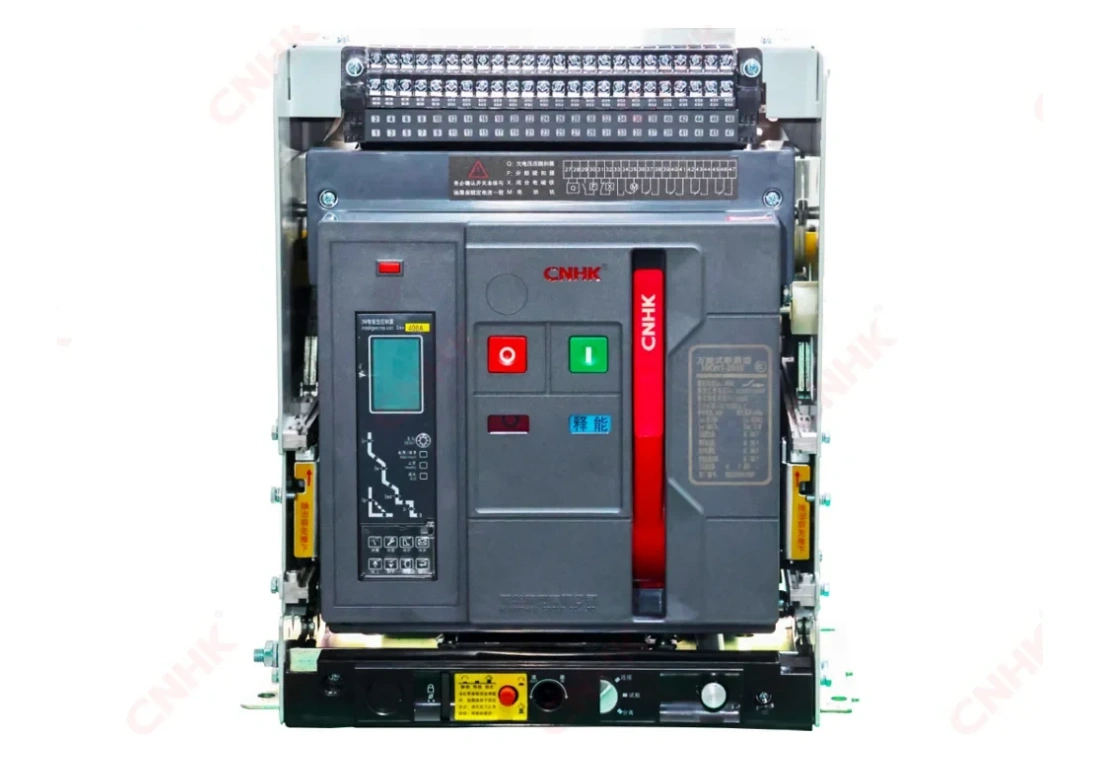
HUANGHUA’s HKW1 Series Air Circuit Breaker lists fixed and drawer arrangements and H, M and L controller options. Its published scope also identifies auxiliary release choices. Those options provide a useful starting point for a configuration enquiry; they should be confirmed for the exact version being considered.
For a project comparing breaker families, the low-voltage circuit breaker range provides the broader product route. An enquiry can then state the required protection, installation and control functions and request the matching HKW1 technical documents.
References
Schneider Electric: ACB working principle and component overview
ABB: ACB mounting and trip-unit configurations