
 Huanghua Group Co., Ltd.
High Voltage Transformer Types: Power, Measurement and Testing
A high voltage transformer may mean equipment that transfers power, a device that provides a scaled measurement, or a transformer used in a high-voltage test system. These applications require different output duties and documentation. A voltage value alone cannot identify the right type.
The first question in an enquiry is therefore: what must the transformer supply or measure? Resolve that purpose before comparing construction, capacity or price.
Three applications that should not be mixed
| Type | Main job | Important enquiry fields |
|---|---|---|
| Power or distribution transformer | Transfers electrical power between system voltage levels. | Winding voltages, capacity, connection, losses, insulation and thermal duty. |
| Instrument transformer | Provides electrical quantities for measurement or protection. | Ratio, measurement/protection duty, output burden and accuracy requirements. |
| Test transformer or HV test system | Provides a specified test voltage under controlled test conditions. | Output waveform, test voltage, output capability, duration and control system. |
A voltage transformer used for metering is not a general substitute for a power transformer. Likewise, a laboratory test source should not be selected as continuous distribution equipment just because its output voltage matches a number in the project.
Start with power, measurement or testing
For a distribution project, describe the network side and the required downstream supply, then state the expected load. For a measurement project, identify the meter or protection interface and its required electrical quantities. For a testing project, identify the apparatus and the approved test method.
This separation is useful when an enquiry has passed through several people. “HV transformer required” may have lost the original purpose. Asking for a single-line diagram, measurement specification or test plan can restore the missing context more effectively than requesting a longer product catalog.
Three enquiries that need different answers
- “Supply a facility from the distribution network.” This is a power-transfer task. The review starts with winding voltages, apparent-power duty, impedance, losses and the network/installation interfaces.
- “Provide a voltage signal for a protection relay.” This is a measurement task. The required ratio, burden, accuracy/protection duty and relay input must agree. A matching secondary voltage does not make the device a general-purpose power supply.
- “Apply a controlled test voltage to equipment.” This is a test-system task. Output capability, waveform, duration, control and the specified test method govern the selection. A test source’s high output voltage does not imply continuous facility-supply capability.
These examples are a useful first filter when search results mix power transformers, instrument transformers and laboratory equipment. They also expose a common quotation error: comparing kVA values or prices before establishing that both offers perform the same function.
Keep operating voltage and withstand-test voltage in separately labelled fields. The former describes an operating condition; the latter is evidence associated with a specified insulation test. An impressive test-voltage number cannot be reused as a continuous output rating.
Operating voltage is not the whole insulation specification
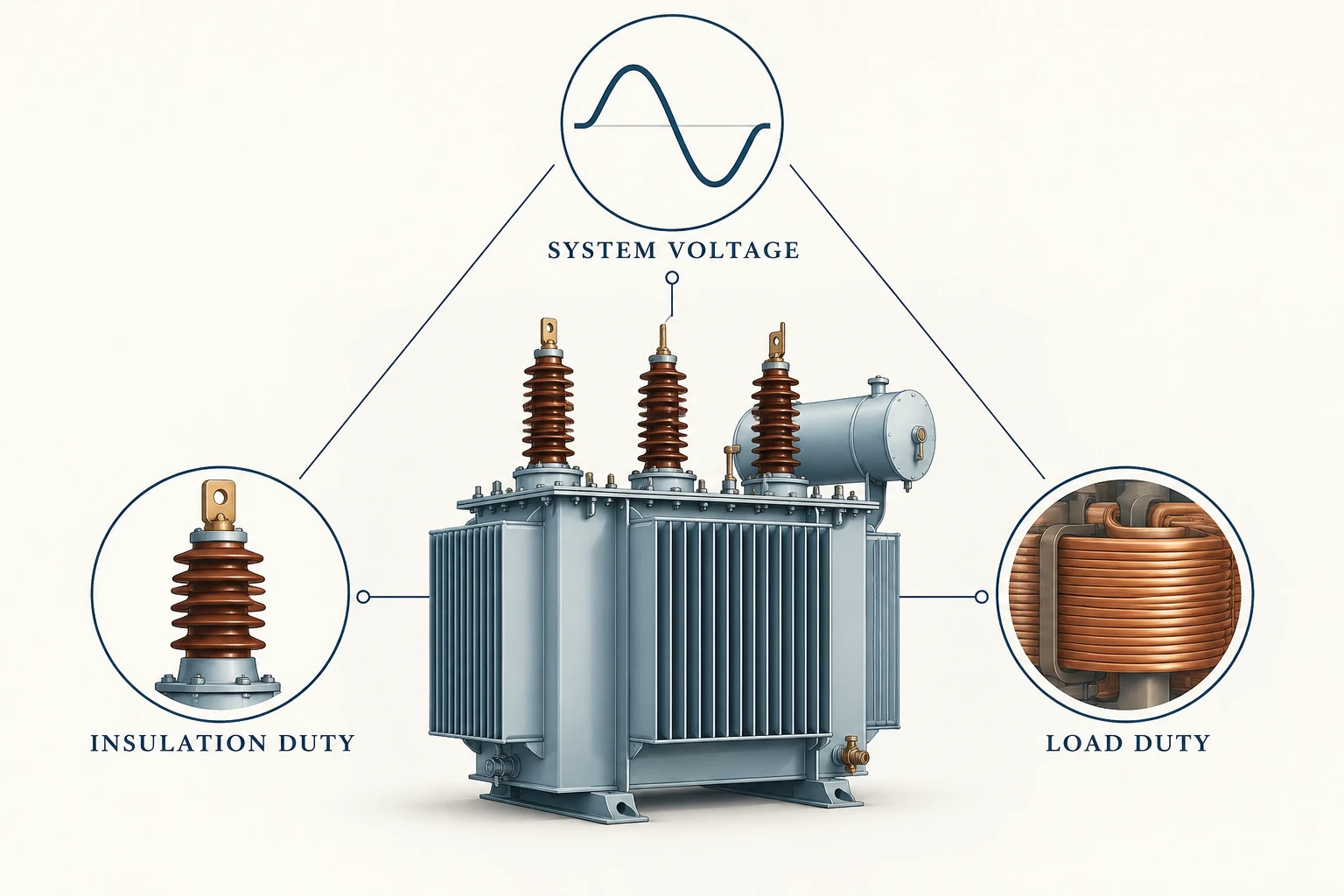
Normal system voltage and insulation duty are related but different requirements. The offered equipment needs an insulation design appropriate to the system and the specified service conditions. Ask the responsible engineer to define those requirements rather than treating the largest voltage number on a brochure as sufficient.
Keep rated winding voltage, insulation information and test documentation in separate fields. This prevents a withstand-test value from being mistaken for a permissible continuous operating voltage. Also identify the voltage terminology used by the supplier; “high voltage” and “medium voltage” labels can vary with the product and standard context.
Frequency, connection and service conditions matter
For power equipment, the winding connection, frequency, loading and installation environment form part of the proposed design. A changed neutral arrangement or an unreported ambient condition can affect the project even when the headline voltage and kVA appear unchanged.
Request a proposal that states its assumptions. If the supplier has assumed indoor installation but the equipment will be exposed outdoors, resolve that difference before approving drawings. Similar care is needed for dimensions, access and cable interfaces.
Match the product route to the actual task
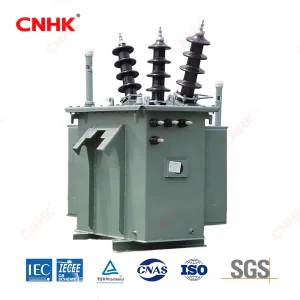
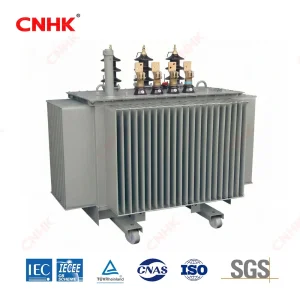
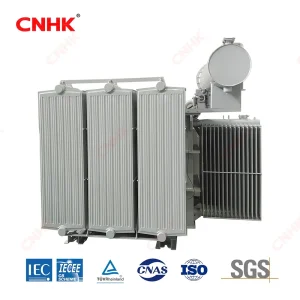
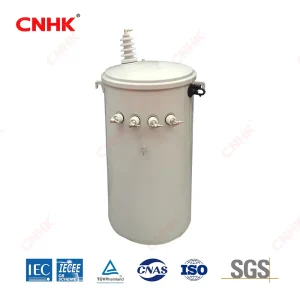
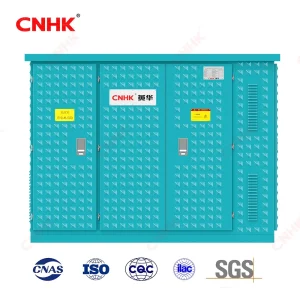
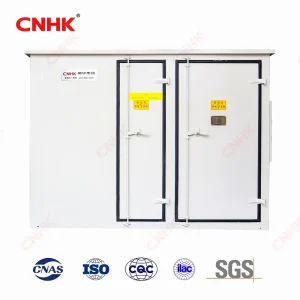
Huanghua’s three-phase oil-immersed distribution transformer is relevant to power distribution. The source describes a three-phase voltage-conversion role and oil-immersed construction. It does not establish that the same product is an instrument transformer or a laboratory high-voltage test source.
For a distribution enquiry, submit winding voltages, required capacity, connection and neutral requirements, site conditions and the agreed document list. Ask the supplier to identify the selected model and any deviations against each field.