
 Huanghua Group Co., Ltd.


MPCB Full Form in Electrical Systems: Motor Protection and Selection
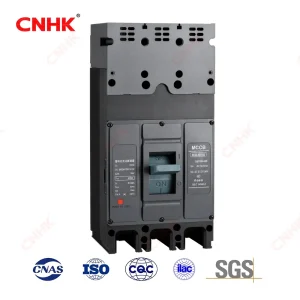
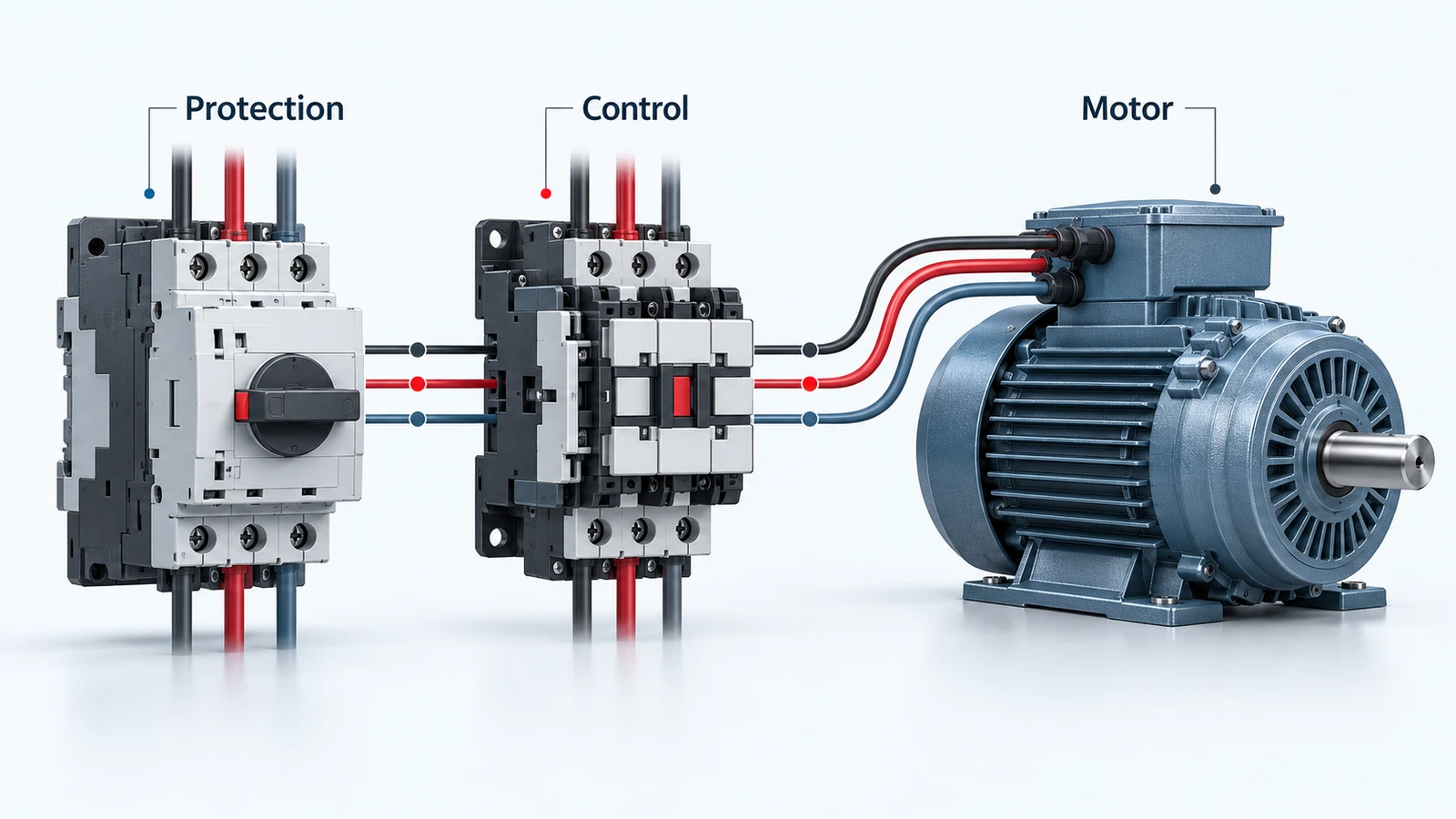
MPCB means motor protection circuit breaker. It is designed for motor circuits, combining specified protective functions in a compact switching device. Many thermal-magnetic MPCBs provide adjustable overload protection and short-circuit protection. Other functions and operating limits depend on the product, so “MPCB” alone is not a complete motor-starter specification.
The useful question is not whether a motor needs a larger breaker. It is whether the protection can accommodate the motor’s normal operation and starting conditions while disconnecting the faults it is intended to detect. That requires the motor data, the supply conditions and the selected starter components to be considered together.
What a motor circuit must handle
A motor can draw a high starting current for a short period and then settle to a lower running current. Mechanical overloading, a stalled load, loss of a phase or a short circuit create different conditions. A single ampere number does not describe all of them.
An overload element responds to sustained heating-related conditions according to its characteristics. A magnetic or other short-circuit element responds to much higher fault current. Some devices also provide phase-loss sensitivity or other motor-specific features. Confirm these functions in the selected device’s technical documentation rather than assuming that every MPCB has the same protection package.
MPCB, MCB, MCCB and overload relay
| Device | Principal role | What still needs checking |
|---|---|---|
| MPCB | Protection tailored to a motor branch | Adjustment range, starting duty, fault capability and supported starter combination |
| MCB | Overcurrent protection within its specified application | Whether the motor still needs separate overload protection and coordination |
| MCCB | Overcurrent interruption with product-dependent settings and capabilities | The trip unit’s motor suitability and the complete branch arrangement |
| Overload relay | Detect overload conditions and command a contactor to open | A coordinated short-circuit protective device is still required |
| Contactor | Routine electrically controlled switching | It does not by itself replace the required protective devices |
An MPCB is therefore not simply another name for an MCCB. Equally, a contactor and overload relay do not automatically provide a complete short-circuit protective system. Schneider Electric’s motor-branch guidance distinguishes overload protection from the fuse or breaker needed to clear short circuits.
Start with the motor nameplate
Collect rated voltage, frequency, phases, rated current, output power, connection and duty information. Use the motor’s actual nameplate current at the intended connection and voltage as a selection input. A power-to-current calculation is useful for checking plausibility, but it should not silently replace the nameplate data.
For example, an illustrative motor nameplate may state 11 A at its intended supply. A proposed MPCB adjustment range must accommodate the required setting determined by the motor and device instructions. That does not automatically justify turning the dial to 11 A in every circuit: the starter arrangement, location of the protective element and manufacturer’s procedure also matter.
A star-delta starter makes this distinction especially important. Protection located in the line and protection located inside the delta do not measure the same current. A general blog formula should not be used to move an overload setting from one arrangement to another.
Check starting behavior before changing a setting
If a motor trips during acceleration, increasing the setting may hide the problem. First establish whether the cause is excessive acceleration time, mechanical binding, incorrect supply, repeated starting, a wiring defect or an unsuitable protective characteristic. The selected trip class and starting-current behavior must fit the application.
A fan with a long acceleration period and a small conveyor with a short start may have different needs even if their normal running currents are similar. For a drive-fed motor, the variable-speed drive’s protection functions, permissible upstream devices and cable requirements also become part of the design. A direct-on-line starter recommendation cannot simply be reused.
Coordinate the complete starter
Breaking capacity must be suitable for the available fault current at the installation point and for the stated voltage. It is separate from the normal running-current adjustment. A device that carries the motor current correctly can still be unsuitable for the prospective short circuit.
Where a manufacturer publishes coordination tables for an MPCB, contactor and associated accessories, check the exact references and conditions. Substituting a similar-looking contactor can invalidate the basis of the combination. Coordination classifications describe defined behavior under specified tests; they are not a promise of unlimited service after any fault.
Also establish the required isolation and emergency-stop arrangements. A local operating handle, a lockable isolating function and a machine emergency-stop circuit serve related but different purposes. The machine or process risk assessment determines the necessary control architecture.
Information to include in an MPCB enquiry
- Motor details: nameplate, duty, load type, acceleration time and starts per hour where relevant.
- Supply details: voltage, frequency, phases and available fault current.
- Starter arrangement: direct-on-line, reversing, star-delta, soft starter or drive-fed.
- Required combination: proposed contactor, overload functions, accessories and coordination evidence.
- Installation: enclosure, ambient conditions, mounting and operator access.
- Documentation: settings record, approved schematic, device manuals and test requirements.
For a larger distribution assembly, define the motor branch separately from the incoming and feeder breakers. The MCB versus MCCB guide provides the broader distribution-device comparison; it does not replace motor-starter coordination.
Questions buyers often ask
Does an MPCB replace a contactor?
Not for normal remote switching duties simply because it has a manual handle. Whether a contactor is needed depends on control frequency, automation, operating duty and the approved circuit.
Does an MPCB provide earth-leakage protection?
Do not assume so. Earth-fault or residual-current protection must be identified explicitly in the product functions or provided by the engineered arrangement.
Can the same MPCB be used for any motor with the same kilowatt rating?
No. Current changes with voltage, efficiency, power factor, connection and motor design. Starting duty, environment and short-circuit requirements can also differ. Compare the actual motor data and circuit conditions.