
 Huanghua Group Co., Ltd.
Transformer Oil: Functions, Types and the Tests That Matter
Transformer oil is an electrically insulating liquid that also carries heat away from a transformer’s internal components. The term commonly covers mineral insulating oil and, more broadly, alternative dielectric liquids such as natural and synthetic esters. The fluid must suit the transformer’s insulation system, cooling design and operating conditions.
Choosing a fluid and assessing an oil sample are related but different tasks. A specification identifies what belongs in the equipment. A laboratory report describes particular properties of a sample. Neither a fluid-family name nor one satisfactory test result establishes the condition of the complete transformer.
Transformer oil provides insulation and cooling
The fluid helps electrically separate components at different potentials while transferring heat away from the active parts. It works alongside solid insulation; it is not the complete insulation system on its own.
This dual role explains why an oil specification cannot stop at electrical performance. The transformer design also depends on the liquid’s thermal behaviour. Changing fluid therefore requires an assessment of the equipment and its intended service, rather than a comparison of a single headline property.
Oil condition changes during service. Moisture, contamination and ageing can affect its insulating properties. Testing helps reveal those changes, but different tests examine different parts of the problem.
Mineral oil, natural ester and synthetic ester
The main distinction is between fluid families, followed by the properties of the specific formulation. Family names are useful for shortlisting; the approved product and transformer design determine suitability.
Mineral insulating oil
Mineral oil is the reference fluid in many comparisons with ester liquids. For a transformer already specified for mineral oil, the starting point is its approved oil specification and condition history. A proposal to use a different liquid needs a separate engineering review, rather than an assumption that all insulating fluids are interchangeable.
Natural ester fluid
Natural esters are specially refined and formulated vegetable-based dielectric liquids. They are engineered insulating fluids, not ordinary vegetable oil. Supplier literature describes differences from mineral oil in moisture behaviour and fire-related properties; those benefits belong to specified products and conditions.
Air exposure is a practical selection question. For example, published natural-ester guidance identifies non-breathing equipment as the preferred arrangement. The supplier must confirm how the proposed fluid works with the transformer’s actual preservation system.
Synthetic ester fluid
Synthetic ester is a separate category from natural ester. Product literature includes synthetic formulations intended for breathing equipment and demanding cold-climate applications. That does not make every synthetic ester suitable for every transformer.
A useful comparison therefore names the candidate fluids and asks about preservation design, cold-temperature behaviour and equipment approval. A general claim that one family is “best” leaves the project conditions unanswered. Fire classification or biodegradability claims also need the exact product documentation; they are not established by the word “ester” alone.
Transformer oil testing: four different questions
BDV, moisture, DGA and tan delta provide complementary information. Treating them as interchangeable can turn a valid laboratory result into an unsupported conclusion about the asset.
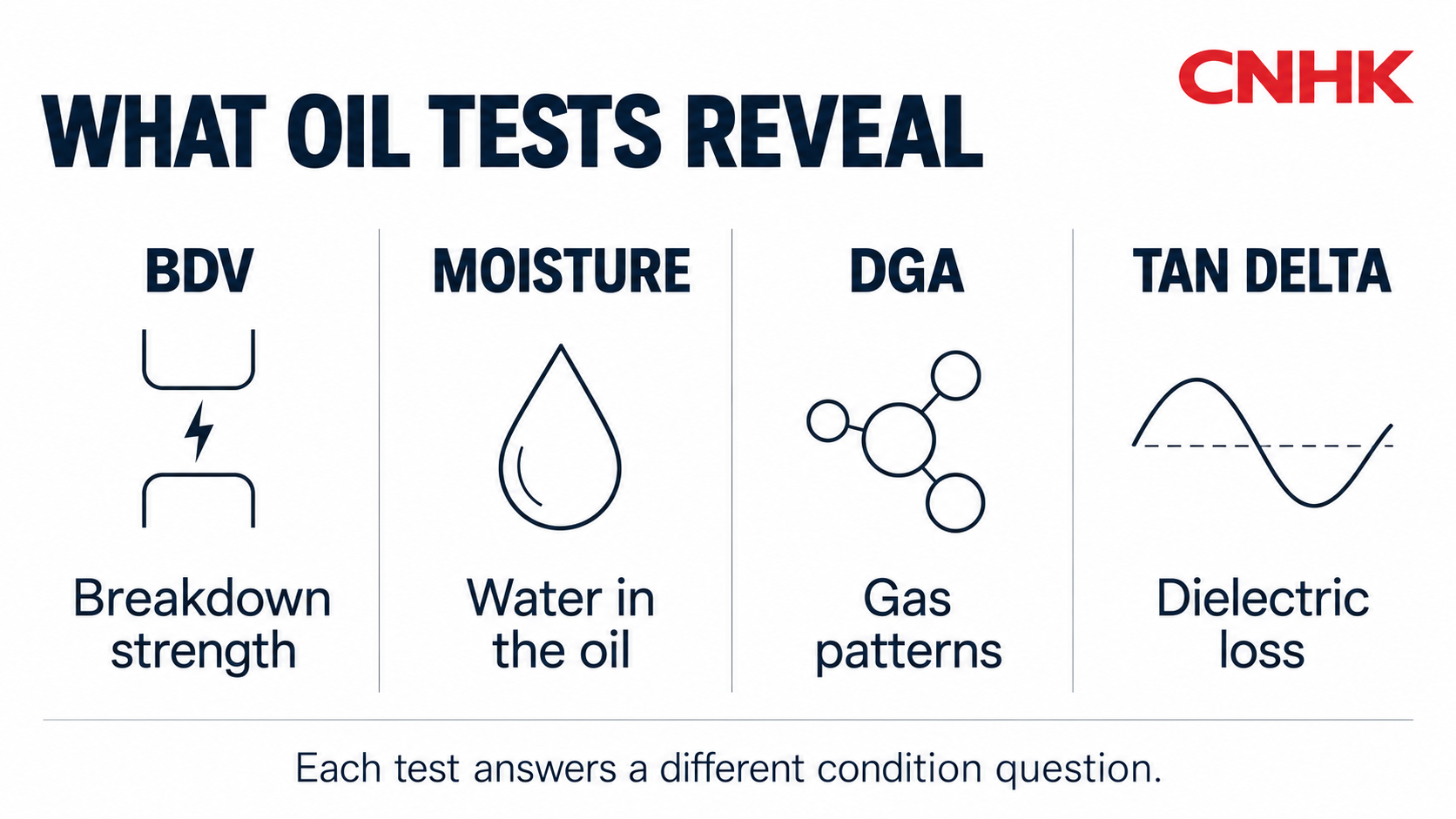
| Test | Main question | Interpretation limit |
|---|---|---|
| Dielectric breakdown voltage (BDV) | How does this sample withstand electrical stress under the stated test method? | It is not a diagnosis of every internal fault. |
| Moisture analysis | How much water is measured in the oil sample? | Oil-water content alone does not establish paper dryness. |
| Dissolved gas analysis (DGA) | What gas pattern warrants investigation? | A specialist interprets the pattern in the asset’s context. |
| Tan delta / dissipation factor | What dielectric loss does the sample show? | It complements the other measurements. |
A low water result is not a certificate of dry solid insulation. Cellulose insulation can hold much more water than the surrounding oil. The measured oil value answers a sample question; it should not be stretched into a direct measurement of moisture throughout the paper.
DGA asks another question. In mineral-oil equipment, electrical and thermal stress can generate gas patterns that help specialists investigate developing faults. The diagnostic task is to interpret the pattern, not to attach a complete fault diagnosis to one isolated reading. Fluid-specific interpretation remains necessary.
These distinctions also explain why satisfactory BDV does not replace DGA or moisture assessment. A test can answer its own question well while leaving a different condition unexamined.
How to read an oil report before deciding on action
The useful starting point is the identity and context of the sample. A report review should establish the transformer, the fluid, the sampling date and the stated methods. Without that context, a buyer cannot confidently relate a result to the equipment under discussion.
The next distinction is between new, reclaimed and in-service fluid. Interpretation depends on fluid type, application and the relevant criteria. A number copied from a guide for a different liquid or condition does not become an acceptance limit for this transformer.
Historical results are useful context, but a comparison also needs consistent methods and a clear sample history. The practical question for the laboratory or asset engineer is what changed, whether the change is meaningful, and what further assessment is needed.
This reading sequence separates the report from the maintenance decision. It does not turn an oil result into an automatic instruction to filter, replace or keep equipment in service. Testing frequency and the next action belong in the equipment’s maintenance plan and technical review.
Specify the fluid with the transformer configuration
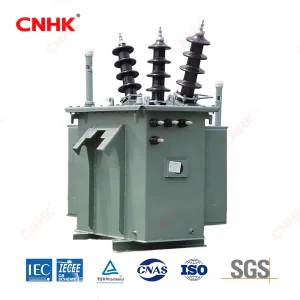
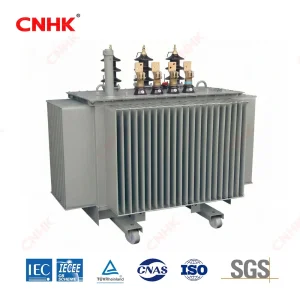
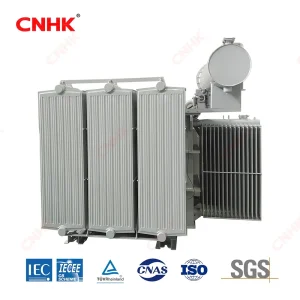
The tank arrangement is a concrete place to connect fluid selection with the equipment. Huanghua’s medium three-phase oil-immersed distribution transformer is listed with sealed and conservator configurations and ONAN cooling. The required version should be identified in the enquiry and confirmed in the offer.
For that discussion, a useful specification records the approved fluid, the preservation arrangement, the operating conditions and the required fluid documentation. If an ester alternative is proposed, its suitability needs confirmation for the offered transformer; the existence of a sealed tank does not establish approval.
Preservation design is also not a universal exemption from condition assessment. The manufacturer’s instructions and the asset maintenance plan should define the applicable checks. The deliverable is a documented match between fluid, transformer and service conditions, rather than a generic promise of maintenance-free oil.